
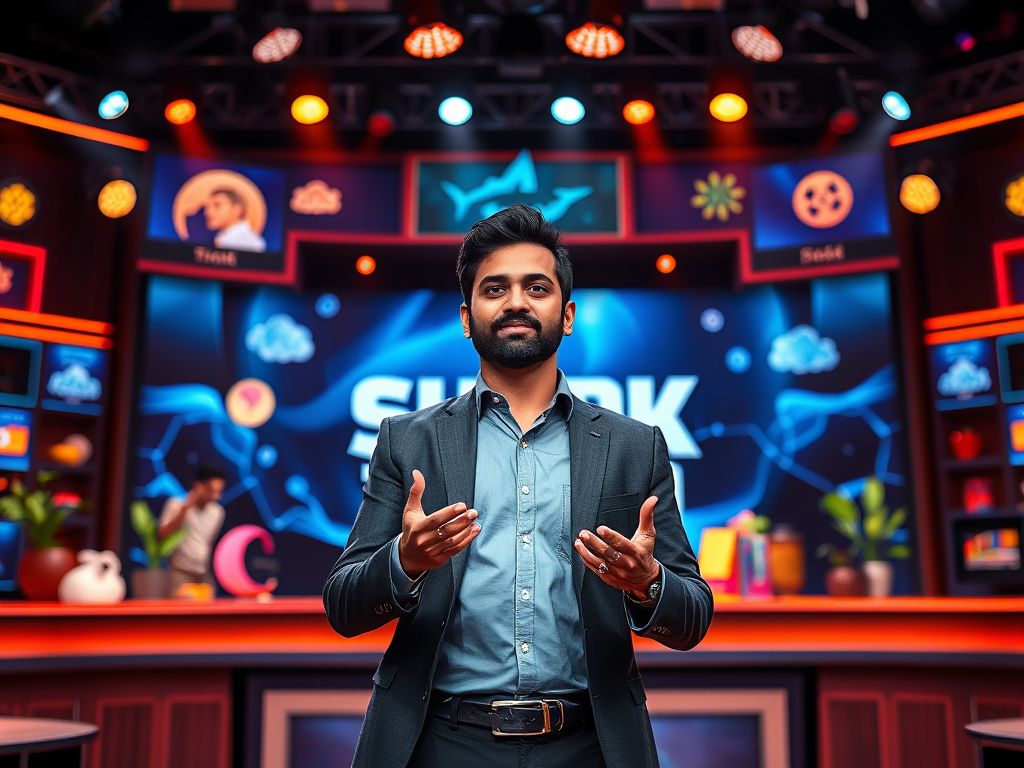
Shark Tank India has always been a cultural phenomenon, a stage where bold ideas meet sharp business minds. But Season 5 marks a deeper shift, one that reflects how the Indian startup ecosystem itself is evolving. With the addition of Varun Alagh, co-founder of Mamaearth and a leading force in brand-driven growth, the show signals a new era: branding is not a luxury; it’s a foundational pillar of startup success.
This season isn’t just about investments, valuations, and pitch drama. It’s about a new lens, one that places brand strategy, customer trust, and market perception at the center. And for India’s aspiring entrepreneurs, it serves as a reminder that those who master brand thinking will stand out in the most competitive markets of the decade.
Why Varun Alagh’s Entry Matters
In previous seasons, Shark Tank India’s investor lineup was dominated by leaders from e-commerce, fintech, edtech, and consumer goods. But Varun Alagh brings something uniquely different:
a builder’s mindset rooted in brand strategy, storytelling, emotional resonance, and long-term loyalty building.
Brands like Mamaearth and The Derma Co. didn’t succeed just because of product innovation. They succeeded because they understood:
- The emotional psychology of modern Indian buyers
- The rise of ingredient-led transparency
- The hunger for authentic narratives
- The shift towards natural, sustainable lifestyles
- And the new power of digital-first consumer influence
This blend of strategy + story is exactly what most early-stage founders miss, and what Shark Tank India 5 is poised to shine a light on.
Alagh’s presence signals a new emphasis on one truth:
A strong brand can be the difference between a startup that survives and a startup that dominates.
Brand-Led Entrepreneurship Is the Future
Today’s startup landscape is flooded with products. Anyone can build a prototype. Many can manufacture. But only a few can create a brand that moves people.
A brand isn’t just a logo.
It’s the emotions, promises, and experiences people associate with your business.
Shark Tank India 5 emphasizes that founders must think beyond functionality and ask:
- Why would customers choose us over a cheaper alternative?
- What human emotion does our brand speak to?
- How do we earn trust, not just sales?
- What story are we telling that people want to be part of?
- How does our brand make someone feel?
This shift from being product-focused to brand-focused is exactly why India is seeing D2C champions rise so quickly. And Season 5 captures this evolution perfectly.

Why Branding Matters More Than Ever
1. Products can be copied; brands cannot
In an age of fast manufacturing and AI-driven product development, features, formulas, and formats can be replicated overnight. But a brand’s identity, its community, emotions, values, is irreplaceable.
Think of Mamaearth. Countless natural skincare brands exist, but few have created the trust, relatability, and consistent messaging that make it stand out.
2. Consumers now choose brands emotionally, not rationally
Modern shoppers don’t just buy what products do.
They buy how brands make them feel.
Whether it’s:
- safety
- confidence
- status
- nostalgia
- comfort
- aspiration
these emotional triggers influence purchase behavior more than specifications.
3. Brand equity creates long-term value
A strong brand turns:
- customers into repeat buyers
- buyers into advocates
- advocates into community
- community into culture
This is how startups transform into movement, and movements cannot be disrupted.
4. In noisy markets, clarity becomes your superpower
India’s digital space is crowded. The cost of attention is rising. In such an environment, your brand story becomes your anchor. It tells your audience:
- Who you are.
- What you stand for.
- Why you exist.
- Why they should care.
And that clarity is priceless.
For Entrepreneurs: What This Shift Really Means
With the new branding-centric perspective in Shark Tank India 5, early-stage founders must revisit their fundamentals:
Craft a compelling brand story
A story that explains:
- your mission
- your motivation
- your solution
- your difference
A story that is memorable. Shareable. Human.
Build recognition through consistency
Consistency builds trust.
Consistency builds recall.
Consistency builds identity.
Your packaging, colors, messaging, tone, everything should feel unified.
Stand for something bigger than your product
Brands with purpose win hearts.
Customers want to be part of something meaningful.
Are you solving a social problem?
Environmental problem?
Community problem?
Identity problem?
Tell that story.
Focus on long-term trust, not short-term hype
Short bursts of attention don’t build legacy businesses.
Trust does.
Invest in customer experience.
Build honesty into your brand.
Deliver value every time.
Think about differentiation from Day 1
The fastest way to fail is to blend in.
The fastest way to grow is to stand out.
Ask yourself:
- What makes your brand unique?
- What makes it memorable?
- What makes it irreplaceable?
Startups that win are those that define their identity early.
For Audiences: What’s Changing for Viewers?
Viewers of Shark Tank India will notice more discussions around:
- brand strategy
- consumer psychology
- product-market fit
- storytelling
- long-term positioning
- community building
It’s no longer just about revenue numbers or margins.
It’s about building something people love, trust, and return to.
This shift is great for aspiring founders because it offers real education. The show becomes a masterclass in building brands, not just businesses.
The Bigger Takeaway
Shark Tank India 5 isn’t only showcasing innovative startups. It’s teaching us a new truth about entrepreneurship in India:
Branding is the new moat.
Emotion is the new currency.
Trust is the new marketing.
If you’re launching your own venture, start here:
- Define your story.
- Build authenticity.
- Create an identity people feel connected to.
- Focus on emotional differentiation, not just functional differentiation.
The Indian market is evolving. And the founders who build with branding at the core?
They’re the ones who will lead the next decade of entrepreneurial success.


 YORKAURA
Leave a comment